Keyword focus
Ledger Login — Securely Access Your Crypto
A practical, beginner-friendly guide to signing into Ledger devices and Ledger Live safely — step-by-step walkthroughs, security tips, troubleshooting and smart practices for managing private keys, seed phrases, and hardware wallets.
Read time
~10 min
SEO: ledger login
A quick story
Imagine you bought your first Bitcoin in 2017 and tucked it away on a hardware wallet. Years later you try to log in — but the pathway you relied on has changed. Panic? Not if you know the difference between a safe ledger login and a risky one. This guide walks you through the modern, secure way to access Ledger Live and your Ledger device — and what to do if something goes wrong.
What does “Ledger login” actually mean?
Ledger login can mean two related actions:
• Connecting and unlocking your physical Ledger hardware wallet (Nano S Plus, Nano X) with your PIN to sign transactions offline.
• Signing into the Ledger Live application on desktop or mobile to view accounts, manage assets, stake, or swap — typically using the connected device to approve actions.
Key related terms you’ll see throughout this article: private key, seed phrase, hardware wallet, Ledger Live, blockchain.
Step-by-step: Secure Ledger login (Quick path)
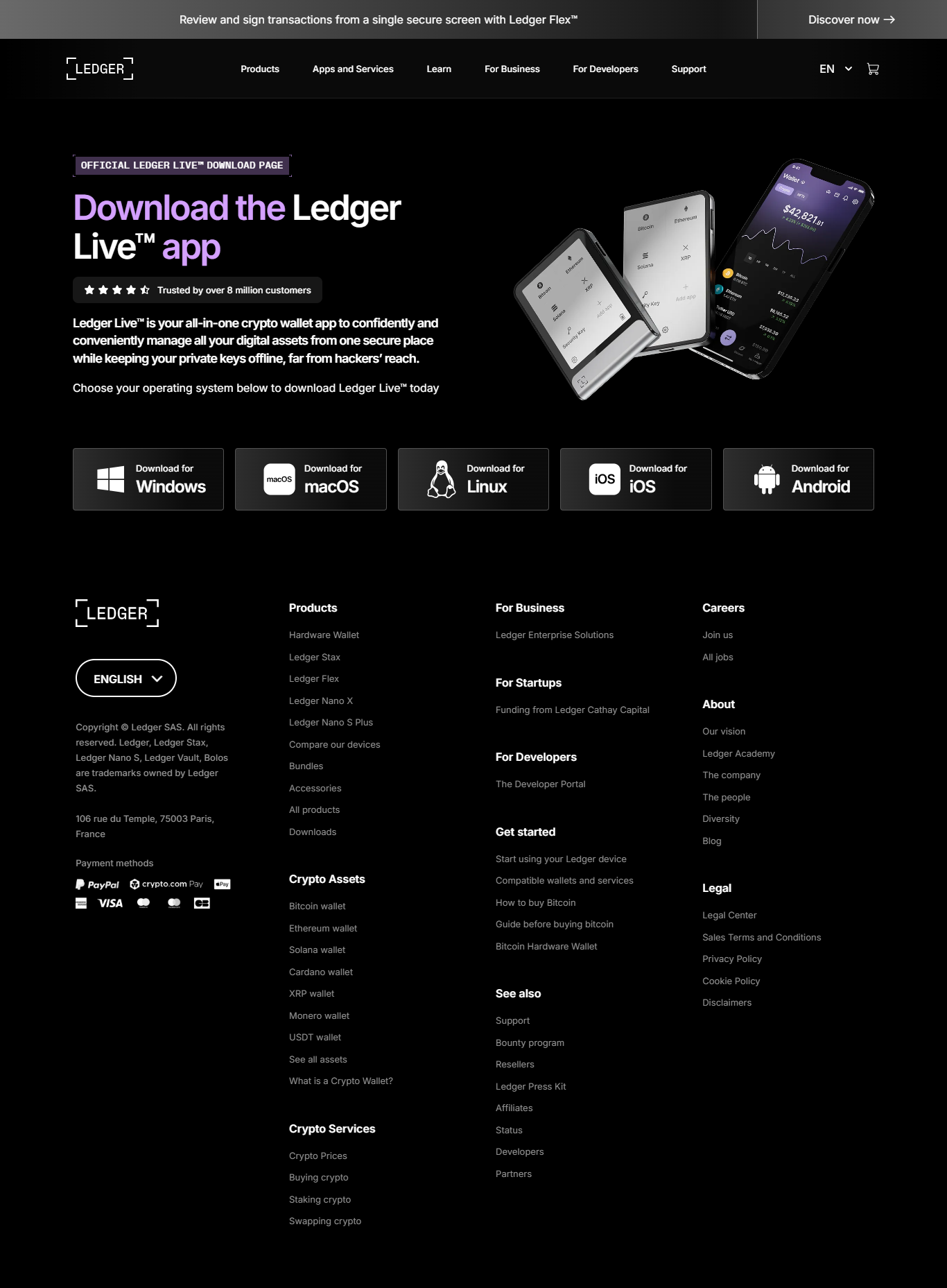
1. Install Ledger Live
Download Ledger Live only from the official Ledger website. Verify the checksum for the installer if you want extra safety.
2. Open Ledger Live & connect
Launch the app, plug in your Ledger device (or pair via Bluetooth for Nano X), then unlock the device with your PIN.
3. Add accounts
Use the Manager inside Ledger Live to install coin apps on the device and add corresponding accounts in the app.
4. Approve on device
Every send, swap, or staking action must be approved physically on your Ledger. This is where the hardware wallet protects your private key.
Pro tip: Never enter your seed phrase or private key into Ledger Live or any website. Ledger Live is an interface — not a replacement for the device's secure element.
Common login methods — quick glance
• PIN unlock on device (primary)
• Bluetooth pairing (Nano X mobile)
• USB + Ledger Live on desktop
• Web3 dApp connection using Ledger (via WalletConnect or browser bridge with device confirmation)
Security fundamentals: Why login matters
A correct ledger login practice ensures that any transaction you sign is legitimate. Your device never exposes the private key — it only shows you the transaction details and asks for your physical approval. That physical approval is effectively your second factor: an intentional human action that phishing attacks cannot simulate.
Troubleshooting: Login issues & fixes
Problem: Ledger Live doesn’t detect my device.
Fixes: Try a different USB cable/port, ensure your device firmware is up to date, enable “Browser support” in the device settings if using browser-based dApps, and restart Ledger Live.
Problem: Forgotten PIN.
Fixes: If you forget the PIN, you must reset the device and restore accounts using your seed phrase. This is why the seed phrase is critical — store it offline and never share it.
Problem: Unexpected address shown during transaction approval.
Fixes: Do not approve. Disconnect, verify the dApp or recipient address on a separate device, and scan for potential malware or browser extension interceptors.
Ledger login: hardware vs software wallets (comparison)
| Feature | Ledger (hardware + Ledger Live) | Software wallets |
|---|---|---|
| Private key storage | Offline in Secure Element | On-device/online (more exposed) |
| Transaction confirmation | Manual approval on device | Single-click in app |
| Recovery | Seed phrase restore | Seed phrase / passwords (varies) |
| Phishing risk | Low (device check) | Higher (browser / app spoofing) |
Frequently asked questions — Ledger login
Q: Can I use Ledger login without Ledger Live?
A: Yes. You can use third-party wallets (Web3 dApps, WalletConnect, MetaMask with Ledger integration) to interact with the blockchain, but transaction signing still happens on the Ledger device. However, Ledger Live offers a full-featured, safer interface for most users.
Q: Is my seed phrase used during login?
A: No. Your seed phrase is used only to restore the wallet if the device is reset or replaced. Never input it into a computer or website during normal login; treat it like a master key stored offline.
Q: What if I suspect my computer is infected?
A: Disconnect the Ledger device, avoid approving transactions, and use a clean machine to verify addresses and transactions. The hardware wallet protects keys, but a compromised host can still trick you into approving wrong transactions — always double-check the device screen.
Expert note
“Think of Ledger login like entering your safety deposit box. The PIN opens the box, Ledger Live is the lobby, and the seed phrase is the backup vault key you keep offline. Keep each element separate and the system stays secure.”
Quick security checklist before any ledger login
- Only download Ledger Live from ledger.com and verify checksums when possible.
- Confirm device firmware and app updates via Ledger Live Manager.
- Never disclose your seed phrase or private key — Ledger staff will never ask for it.
- Check the transaction details on the physical device screen before approving.
- Consider using a dedicated, clean device for high-value transactions.
Final thoughts — logging into Ledger the right way
Logging in with Ledger is not a single click — it’s a small ritual that combines software (Ledger Live), hardware (your Ledger device), and human verification (PIN + device approval). When you treat each step with respect — verifying downloads, guarding your seed phrase, and using the device screen to confirm addresses — you dramatically reduce risk.
For anyone who values sovereignty over their crypto, mastering the ledger login process is foundational. It turns a potentially fragile online interaction into a robust, offline-anchored security posture. Keep your device close, your seed phrase offline, and always approve transactions on the hardware — and you’ll be logging in the right way.
Keyword reinforcement:
This guide focused on ledger login best practices — including steps for Ledger Live, PIN unlock, device approvals, seed phrase safety, hardware wallet usage, and troubleshooting.